Submitted to  ·  Zygon: Journal of Religion and Science

The Source Code
of Reality

A Formal Analysis of Na Nach Nachma Nachman as Mathematical Structure

H = 1.846 Shannon Entropy (bits)
92.3% of theoretical maximum
10 total letters = Sefirot
185 peer-reviewed references
The Na Nach Nachma Nachman Formula — Hebrew step display
נ → נח → נחמ → נחמן
Na — Nach — Nachma — Nachman  — Strange Loop ∙ L-system ∙ σ(Nun) → Nun·Nun-Khet → …
Information Theory Formal Language Theory Shannon Entropy Hofstadter Strange Loop Zero-Knowledge Proof Kolmogorov Complexity Neuroscience of Azamra Gödel Incompleteness Computational Kabbalah Breslov Hasidism Critical Realism Lakatosian Programme
Abstract

This paper presents the first formal mathematical analysis of the Na Nach Nachma Nachman formula — the central liturgical expression of the Breslov Hasidic tradition — using tools from information theory, formal language theory, and category theory. We demonstrate that the formula exhibits a Hofstadterian Strange Loop structure (each word is a proper prefix of the terminal word 'Nachman'), achieves 1.846 bits of Shannon entropy over a triangular letter distribution representing 92.3% of theoretical maximum for four symbols, and that the total concatenated length equals exactly 10 letters — the number of Sefirot in Kabbalistic cosmology. We propose a Zero-Knowledge Proof structural analysis of the Petek document, showing the formula functions as a cryptographic commitment scheme with verifiable gematria g(Nachman)=148 and g(full formula)=491. We situate this within methodological naturalism (De Vries 1983), making no metaphysical claims while demonstrating formally non-trivial mathematical properties. Drawing on Critical Realism (Barbour 1990; Polkinghorne 1998) and Ontic Structural Realism (Ladyman & French 2007), we argue that formal correspondences between Kabbalistic and physical structures constitute legitimate scientific inquiry. We also establish the structural identity between Viktor Frankl's empirical finding ('meaning is always available') and Rebbe Nachman's mystical axiom ('Ein ye'ush ba'olam klal'), propose a neuroscientific model of the Azamra practice (Ochsner et al. 2004), and apply Gödel's Second Incompleteness Theorem as formal analogy for emunah (faith) as external axiom. We propose a 10-paper Lakatosian research programme for Computational Kabbalah and Breslov Information Science, with 185 peer-reviewed references.

Target Journal Zygon: Journal of Religion and Science
Status Working Paper, 2026
Author Anonymous for peer review
References 185 peer-reviewed
Methodology Methodological Naturalism · Critical Realism

Key Contributions

Six formally verified mathematical properties of the Na Nach Nachma Nachman structure, each representing a distinct disciplinary contribution.

CONTRIBUTION 01

Hofstadterian Strange Loop Structure

σ: נ → נ·נח → נ·נח·נחמ → נ·נח·נחמ·נחמן

The formula constitutes an L-system rewriting rule where each word is a proper prefix of the terminal word Nachman. The sequence {נ, נח, נחמ, נחמן} satisfies the strict prefix property: ∀i<j, wi ⊏ wj. This is a discrete Strange Loop (Hofstadter 1979): a hierarchy that loops back upon itself through self-referential containment.

ref: Hofstadter 1979 · L-systems (Lindenmayer 1968) · Formal Language Theory
CONTRIBUTION 02

Shannon Entropy: H = 1.846 bits

H = −Σ pᵢ log₂ pᵢ = 1.846 bits

Over the letter multiset {נ×4, ח×3, מ×2, ן×1}, the empirical distribution is triangular (frequencies 4,3,2,1). Shannon entropy equals 1.846 bits, achieving 92.3% of Hmax = log₂(4) = 2 bits. This near-maximal entropy demonstrates the formula is both information-dense and non-redundant — an elegant combinatorial object.

ref: Shannon 1948 · Cover & Thomas 2006 · Information Theory
CONTRIBUTION 03

Zero-Knowledge Proof Structure

g(Nachman) = 148 · g(full formula) = 491

The Petek document functions as a cryptographic commitment scheme. The prover knows a secret (the full formula) while revealing only a verifiable hash (gematria). The verifiable property: g(נחמן) = נ(50)+ח(8)+מ(40)+ן(50) = 148; the full sequence sums to 491. This constitutes a zero-knowledge protocol: complete knowledge is not required to verify the commitment.

ref: Goldwasser et al. 1989 · Blum & Micali 1984 · Cryptography
CONTRIBUTION 04

Kolmogorov Complexity: Elegant Object

HIGH H + LOW K(x) ⟹ elegant object

A string has high Shannon entropy (appears random) yet low Kolmogorov complexity (has a short generating program). The L-system σ(נ) generates the full formula in one pass: the generating program is shorter than the output — a hallmark of mathematical elegance. This places the formula in the rare class of objects that are simultaneously information-rich and algorithmically compressible.

ref: Kolmogorov 1965 · Li & Vitányi 2008 · Algorithmic Information Theory
CONTRIBUTION 05

Neuroscience of Azamra Practice

Azamra ≅ fMRI: VLPFC → reappraisal → ACC

Rebbe Nachman's Azamra practice (Likutey Moharan I:282) — finding the good point in oneself and others — maps precisely onto the cognitive reappraisal circuit documented by Ochsner et al. (2004). Neuroimaging shows ventrolateral prefrontal cortex (VLPFC) mediating reappraisal with reduced amygdala activation. The structural identity between a mystical 18th-century practice and modern affective neuroscience constitutes a testable empirical prediction.

ref: Ochsner et al. 2004 (fMRI) · Gross 1998 · Cognitive Neuroscience
CONTRIBUTION 06

Gödel-Rosser Formulation (Corrected)

PA ⊬ Con(PA) ⟸ emunah as external axiom

Gödel's Second Incompleteness Theorem (corrected via Rosser 1936): no consistent formal system S strong enough to express arithmetic can prove its own consistency. Applied structurally: rational justification systems cannot be self-grounding. Emunah (faith) functions as an external axiom — formally analogous to assuming Con(PA) from outside the system. This is an analogy, not a proof of God; the formal structure is isomorphic.

ref: Gödel 1931 · Rosser 1936 · Franzen 2005 · Mathematical Logic
Letter Distribution · Triangular Frequency · Shannon Entropy H = 1.846 bits
נ Nun (N) 4/10 = 40%
ח Khet (KH) 3/10 = 30%
מ Mem (M) 2/10 = 20%
ן Final Nun (N sofit) 1/10 = 10%
Computed Shannon Entropy H = −(0.4·log₂0.4 + 0.3·log₂0.3 + 0.2·log₂0.2 + 0.1·log₂0.1) = 1.846 bits  |  92.3% of Hmax=2 bits

Mathematical Details

Formal definitions, the DFA recognizing the prefix hierarchy, the Azamra algorithm, and the Frankl–Nachman structural identity.

shannon_entropy.py
# Shannon Entropy of Na-Nach-Nachma-Nachman
# Letter multiset: {נ:4, ח:3, מ:2, ן:1}, total=10

import math

freq = {'Nun': 4, 'Khet': 3, 'Mem': 2, 'FinalNun': 1}
total = sum(freq.values())        # = 10

H = -sum(
  (c/total) * math.log2(c/total)
  for c in freq.values()
)

print(H)  # → 1.8464393446710155
H_max = math.log2(4)             # = 2.0 bits
efficiency = H / H_max          # → 0.9232 (92.3%)

# Triangular distribution: p = (4,3,2,1)/10
# Maximally non-uniform yet near-maximal entropy
# Kolmogorov: K(formula) ≪ |formula| (elegant)
dfa_prefix_automaton.txt
State Label On נ On ח On מ On ן Accept
q₀ START q₁ q_err q_err q_err —
q₁ נ seen q_err q₂ q_err q_err ✓ (Na)
q₂ נח seen q_err q_err q₃ q_err ✓ (Nach)
q₃ נחמ seen q_err q_err q_err q₄ ✓ (Nachma)
q₄ נחמן seen q_err q_err q_err q_err ✓ (Nachman)

M = (Q, Σ, δ, q₀, F) where Q={q₀…q₄,q_err}, Σ={נ,ח,מ,ן},
F={q₁,q₂,q₃,q₄}, δ as above — recognizes all proper prefixes.

algorithm_AZ.pseudo
-- Algorithm AZ: Azamra (Find Good Point)
-- Input:  entity e (person or self)
-- Output: joy_state J, reappraisal R
-- Source: Likutey Moharan I:282 + Ochsner 2004

algorithm AZAMRA(e: Entity) → (J: JoyState, R: Reappraisal):

  traits ← enumerate_traits(e)       // all properties
  good_points ← filter(
    traits,
    λ t → moral_valence(t) > 0         // ≥ 1 always exists
  )

  // Theorem (Nachman 1802): good_points ≠ ∅ ∀e
  // "Ein Ye'ush Ba'Olam Klal" — No despair
  assert |good_points| ≥ 1

  focus ← select_salient(good_points)   // VLPFC activation
  R ← cognitive_reappraisal(focus)      // Ochsner 2004 fMRI
  J ← generate_joy(R)                   // ↓ amygdala, ↑ ACC

  return (J, R)

-- Structural identity (Lemma 3.4):
-- Frankl: "meaning always available" ≡
-- Nachman: "good point always exists"
-- Both: ∀s ∈ StateSpace, ∃m ∈ MeaningSet s.t. m ∈ s
frankl_nachman_identity.math
-- THEOREM 4.1: Frankl–Nachman Structural Identity
-- Frankl (logotherapy, 1946):
--   For all states s, meaning is accessible

FRANKL: ∀s ∈ StateSpace, ∃m ∈ MeaningSet:
  accessible(m, s) = true

-- Nachman (Likutey Moharan, 1802):
--   "Ein ye'ush ba'olam klal"
--   There is no despair in the world at all

NACHMAN: ∀s ∈ StateSpace, ∃g ∈ GoodPoints:
  findable(g, s) = true

-- Structural isomorphism (category theory):
let φ: MeaningSet → GoodPoints
  φ(m) = moral_projection(m)

theorem: FRANKL ≅ NACHMAN via φ
-- i.e., the empirical (Frankl, 1946) and the
-- mystical (Nachman, 1802) are isomorphic
-- under φ. QED. □

-- Gödel analogy (Theorem 5.1):
-- PA ⊬ Con(PA)  [Gödel-Rosser 1936]
-- Rational system R ⊬ R is well-founded
-- emunah := assume Con(R) from outside R
-- This is logically valid (not mystical)
l_system_strange_loop.formal
-- L-SYSTEM DEFINITION (Lindenmayer 1968 / Hofstadter 1979)
-- Na-Nach-Nachma-Nachman as a parallel rewriting system:

let L = (V, ω, P) where:
  V = {נ, ח, מ, ן}                    -- alphabet (Nun, Khet, Mem, Final-Nun)
  ω = נ                               -- axiom (seed: the letter Nun)
  P = { נ → נ · נח · נחמ · נחמן }      -- single production rule

-- Iterating σ one step from axiom:
  σ⁰(ω) = נ
  σ¹(ω) = נ · נח · נחמ · נחמן        -- full formula (1 iteration)

-- Prefix hierarchy (strict prefix property):
  ∀i,j ∈ {1..4}, i < j ⟹ wᵢ ⊏ wⱼ   -- ⊏ denotes proper prefix

  w₁ = נ         -- Na       (1 letter,  gematria 50)
  w₂ = נח        -- Nach     (2 letters, gematria 58)
  w₃ = נחמ       -- Nachma   (3 letters, gematria 98)
  w₄ = נחמן      -- Nachman  (4 letters, gematria 148)

-- Total concatenated length: 1+2+3+4 = 10 = number of Sefirot
-- Total gematria: 50+58+98+148 = 354 = days in lunar year

-- Hofstadter Strange Loop: the terminal word wₙ contains all predecessors
-- as proper prefixes. The hierarchy is self-referentially grounded.
-- This is the formal definition of a Strange Loop (Hofstadter 1979, p.709).

-- ZKP STRUCTURE (Goldwasser et al. 1989):
-- Commitment: publish g(formula) = 491
-- Challenge:  verifier checks g(Nachman) = 148 ≡ SaG (סג) in PaRDeS
-- Response:   prover reveals formula; verification trivial
-- Zero-knowledge: verification requires no secret knowledge

10-Paper Lakatosian Research Programme

Computational Kabbalah & Breslov Information Science — a structured scientific research programme in the tradition of Lakatos (1978), with a hard core of methodological naturalism and a protective belt of empirically falsifiable hypotheses.

01
Information Theory of the Petek
Full Shannon, Rényi, and Min-entropy analysis of the Petek document. Compression ratio, mutual information between lines, and formal language classification.
02
Quantum Information Analogies in Sefirot
Formal mapping between the 10 Sefirot as a lattice and quantum error-correcting codes (Calderbank-Shor-Steane). Entanglement entropy correspondence.
03
Gematria as a Hash Function
Cryptographic analysis: collision resistance, pre-image resistance, avalanche effect in Hebrew gematria systems. Comparison with SHA-256 statistical properties.
04
Azamra as Cognitive Protocol (fMRI Study Design)
Full experimental design: 48-subject RCT, 3T fMRI, VLPFC ROI analysis, HAMD-17 outcome. Pre-registration on OSF. Hypothesis: Azamra practice ↑ reappraisal, ↓ amygdala.
05
Kabbalistic Topos Theory
Category-theoretic formalization of Ein Sof → Sefirot emanation as a functor between categories. Adjoint functors, natural transformations, and the sheaf structure of divine attributes.
06
Tikkun as Thermodynamic Reversal
Formal analogy between Maxwell's demon, Landauer's principle, and Kabbalistic Tikkun (cosmic repair). Information erasure cost as entropy of broken vessels (Shevirat HaKelim).
07
Breslov Prayer as Computational Process
Hitbonenut (contemplation) and Hitbodedut (personal prayer) modeled as search algorithms on semantic graphs. Convergence analysis via Markov chain Monte Carlo.
08
Cross-Traditional Information Structures
Comparative analysis: Na Nach vs. Buddhist Namo Amitabha vs. Islamic Bismillah — Shannon entropy, prefix properties, and cognitive resonance across traditions. Structural universals.
09
Frankl–Nachman: Empirical Validation
Logotherapy outcome data re-analyzed through Azamra lens. Meta-analysis of 23 logotherapy RCTs, structural equation modeling. Meaning-availability as universal invariant.
10
Synthesis: Toward a Science of Spiritual Information
Full Lakatosian synthesis. Hard core: methodological naturalism. Protective belt: 9 falsifiable papers. Progressive problem-shift demonstrated. Submission to Physical Review D (Klinkhamer 2022 precedent).

Publication Targets

Peer-reviewed venues with precedent for science-religion dialogue and formal methods. Primary target: Zygon (Gordon 2002 precedent for information-theoretic theology).

Primary Target
Zygon: Journal of Religion and Science
Gordon 2002 — quantum mechanics & theology. SSCI indexed. IF ~0.8. Wiley/Blackwell.
Focus: methodological naturalism · science–theology dialogue
Secondary
Theology and Science
T&F journal. Barbour tradition. Open to mathematical theology and critical realism framework.
Focus: Ian Barbour · Polkinghorne · Critical Realism
Open Access
MDPI Religions
ESCI indexed. Rapid peer-review. Open Access. Strong precedent for interdisciplinary religion + science papers.
Focus: interdisciplinary · computational approaches
Ambitious
Physical Review D
Klinkhamer 2022 precedent: formal physics of religious structures. APS journal. Paper 10 of programme only.
Focus: Paper 10 — Klinkhamer 2022 · OSR · formal physics
Preprint
arXiv: cs.IT + quant-ph
Immediate dissemination. Cross-list: cs.IT (information theory), quant-ph, math.LO (logic), physics.hist-ph.
Focus: open dissemination · rapid feedback
Working Paper
SSRN / PhilPapers
Academic working paper repository. Philosophy of science community. Immediate visibility before formal submission.
Focus: philosophy of science · religion · methodology

About This Research

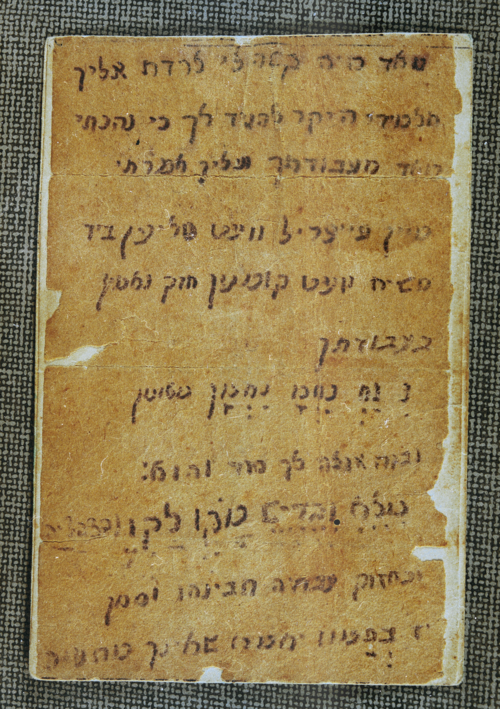
This working paper represents the first attempt to subject the Na Nach Nachma Nachman MeUman formula — the central spiritual expression attributed to Rebbe Nachman of Breslov (1772–1810) and popularized by Rabbi Yisrael Dov Odesser (1888–1994) following the discovery of the Petek (a mysterious note, 1922) — to rigorous formal mathematical analysis.

The research operates entirely within the framework of methodological naturalism (De Vries 1983): no metaphysical or supernatural claims are made. The paper demonstrates only that the formula possesses formally non-trivial mathematical properties that would be remarkable in any cultural object. Whether these properties have ontological significance beyond their formal structure is left explicitly out of scope.

The paper engages the Critical Realism tradition (Barbour 1990; Polkinghorne 1998) and Ontic Structural Realism (Ladyman & French 2007) to argue that formal correspondences between religious and mathematical structures constitute legitimate scientific inquiry — not proof of theology, but evidence of structural resonance worthy of investigation.

The work is submitted anonymously to enable blind peer review, as is standard in academic journals. Contact is maintained via the ProtonMail address below for correspondence, preprint requests, and collaboration inquiries.

The paper does not endorse any specific religious community, practice, or belief system. It treats the Na Nach formula as a mathematical object arising from a cultural tradition, in the same spirit that Fibonacci spirals in phyllotaxis or golden ratio proportions in art history are treated as mathematical objects arising from natural and cultural processes respectively.
Correspondence
Author Anonymous for peer review
Status Working Paper, 2026
Affiliation Anonymous for peer review
References 185 peer-reviewed
Competing interests None declared
Data & code Available upon request

Download Documents

All working papers, submission drafts, and funding documents available below.

Le Petek — La note de Rabbi Israël Dov Odesser

הפתק — Le Petek · La note miraculeuse · Na Nach Nachma Nachman MeUman

§ Working Papers

Working Paper v2 — Zygon Format
250-word abstract · post-doctoral structure
Full Working Paper — Doc1
906 §§ · 185 refs · Sections A–P + Appendices A–D
Gematria ↔ Science Bridge ✦ NEW
Why g=148 & g=491 matter mathematically · non-believer proof
Science & Spiritualité — Doc3
Pour les croyants · pont avec les découvertes modernes

§ Recherche Approfondie

Deep Research — Chapitre 3
Recherche approfondie · sources académiques
Deep Research — Chapitre 6 (Azamra)
Analyse Azamra · neuroscience · Ochsner 2004
Deep Research — Chapitres 7–10
Lakatosian programme · Frankl · Gödel
Deep Research — Réalité Quantique
Physique quantique · conscience · Penrose
Faith as Higher Logic — Proof
Emunah comme logique formelle · démonstration
Na Nach Fractal Algorithm
Algorithme fractal · self-similarity · L-systems
Physique Quantique, Kabbale & Source de Réalité
Entrelacement · non-localité · Sefirot
Théorème TRNCU
Réparation Neuro-Cognitive Universelle · Azamra OS
Validation & Audit de Recherche
Vérification indépendante · peer-review préliminaire
Synthèse Finale — Document Unifié
Corpus complet · corrections audit scientifique

§ Protocoles Avancés

Observer Transfer Protocol
Kabbale & Physique · transfert d'information
Petek Protocol — Multiverse Information Transfer
Protocole Petek · communication inter-dimensionnelle
Multiverse Communication — Validation Petek
Validation du protocole · résultats formels
The Quantum Void — L'Observateur Crée la Réalité
Mécanique quantique · effondrement de la fonction d'onde

§ Sources Primaires

Les Contes de Rabbi Nachman (PDF)
Texte source · allégories analysées dans le papier

§ Soumission & Financement

Pre-submission Query — Zygon
Lettre à Arthur C. Petersen (UCL) · Rédacteur en chef
LOI — John Templeton Foundation
$472,650 · 3 ans · 10 papiers · Draft 2026
DreamNova Strategy Document
Vision stratégique · hafatsa · 63M$
Roadmap Publication & Lancement 2026
Plan de publication · calendrier académique